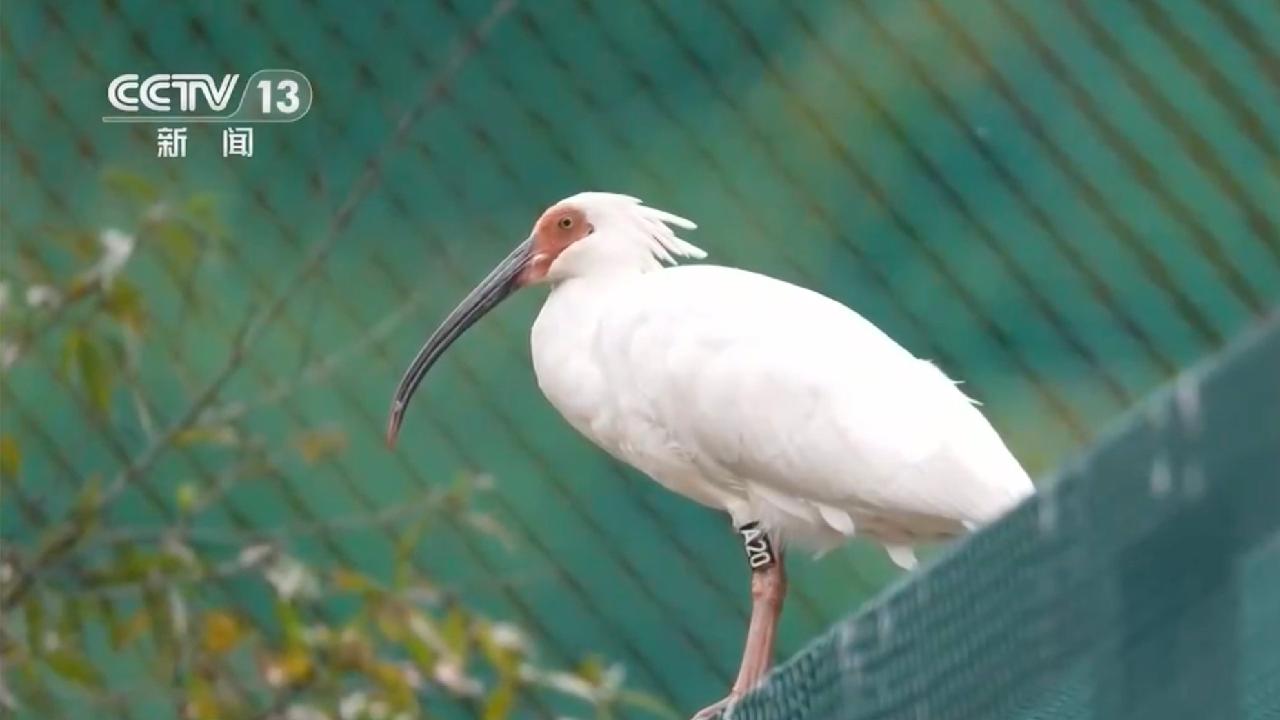
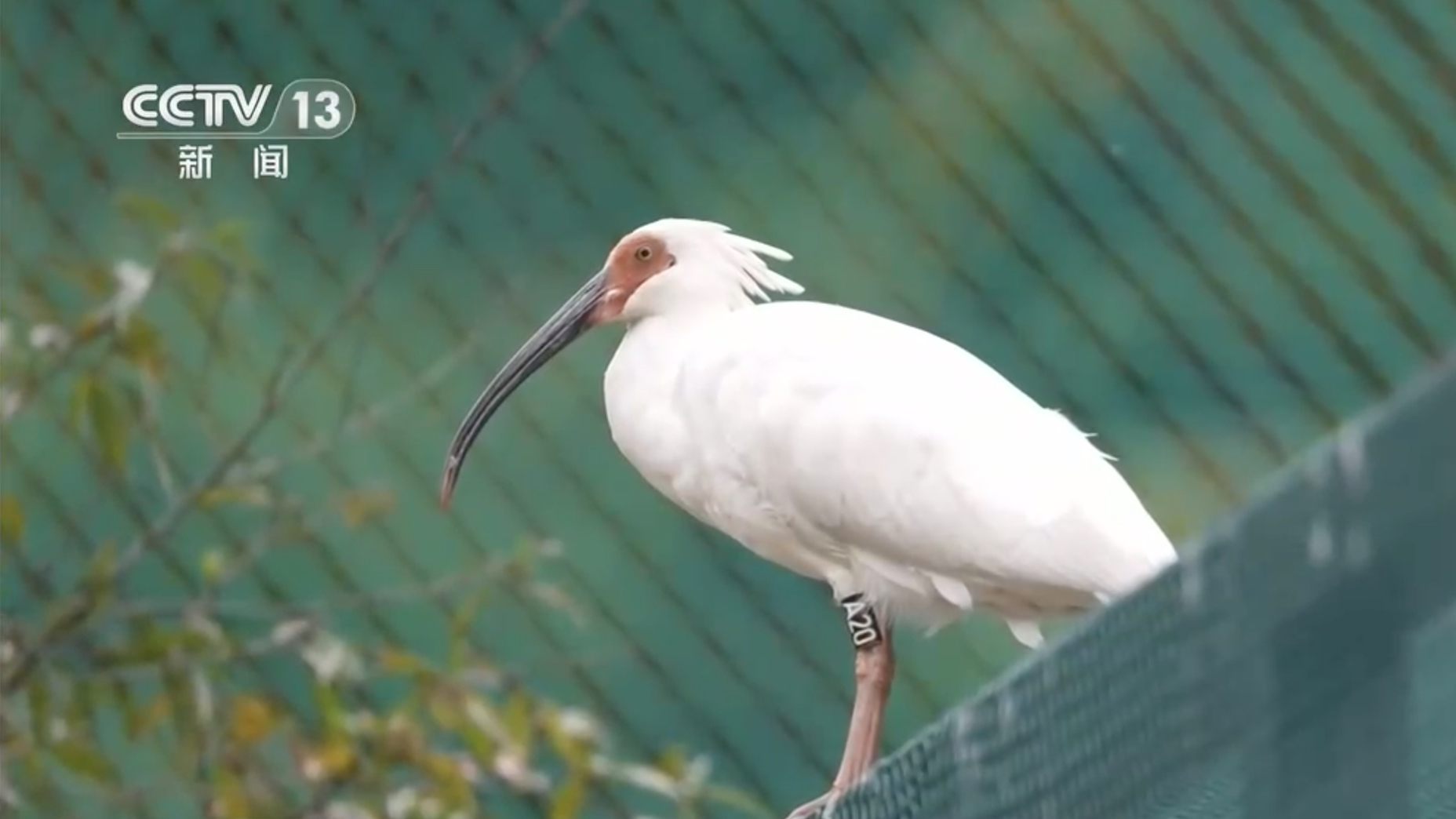
Known as the “Oriental gem” and an ecological barometer, the crested ibis is highly sensitive to changes in its habitat. On Sunday, 20 crested ibises were released into the wild at a site more than 1,500 meters above sea level in the Xiaolongshan forest area in northwest China’s Gansu Province, marking the westernmost and highest-altitude crested ibis rewilding effort in China to date.
The release also marks a new stage in Gansu’s conservation efforts, as the province moves from captive breeding toward rebuilding a wild population.
Before the release, the birds spent more than 20 days in an acclimatization enclosure about 7 kilometers from their breeding facility. Surrounded by trees and located next to shallow wetlands, the enclosure was designed to provide a gradual transition to the natural environment.
The birds were allowed to leave at their own pace. Staff gradually opened the enclosure’s gates, but did not force the birds to fly out. Some may initially remain inside and observe their surroundings, which is normal after years in captivity.
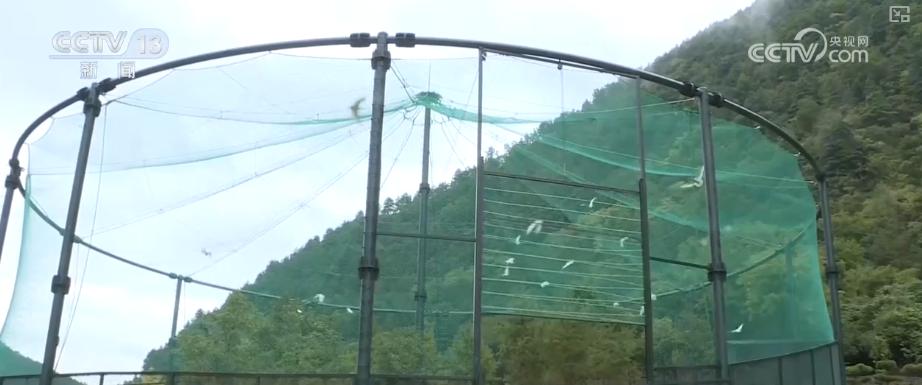
Preparations also included reducing artificial protection and increasing exposure to natural conditions. Glass partitions and shade nets were removed, allowing the birds to experience wind, rain, human and vehicle noise, as well as potential predators.
Food provided inside the enclosure was gradually reduced, while six permanent and more than 10 temporary feeding sites were established nearby to support the transition to natural foraging.
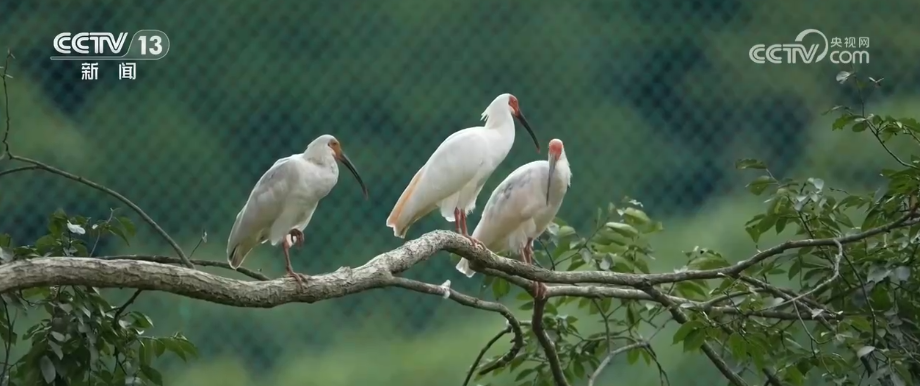
The release follows three years of conservation work in Xiaolongshan. In 2023, 20 crested ibises were brought to the area, and the population has since produced 30 chicks, demonstrating that the habitat can support the species.
September was chosen for the release because temperatures are relatively mild, food resources are abundant and severe weather is less frequent, making it a favorable time for the birds to adapt to life in the wild.