From artificial intelligence (AI) and digital industries to smart manufacturing and talent development, China is turning its vision for technology cooperation with BRICS countries into concrete projects.
At Session II of the 18th BRICS Summit in New Delhi on September 13, Chinese President Xi Jinping put forward five proposals for deepening BRICS cooperation, covering areas including open and inclusive AI, digital industries, smart manufacturing and science and technology talent development.
In AI, a platform developed by China Mobile’s Yunnan branch is exploring how AI services can be made more accessible across borders.
The “AI Caiyun Intelligent Agent Digital Intelligence Platform” won a bronze award at the AI selection competition of the 2026 BRICS Industrial Innovation Competition, held in Kunming, southwest China’s Yunnan Province in April.
The platform integrates capabilities from major large language models, including Jiutian, DeepSeek, Doubao and Tongyi Qianwen. It offers more than 20 AI functions, covering document writing, meeting minutes, AI-generated images and videos, and Yunnan dialect recognition.
Its self-developed Yunnan dialect recognition function has an accuracy rate of 90%. The platform adopts an on-demand model, allowing users to select models and access specific AI capabilities as needed.
It aims to create a secure, efficient and inclusive cross-border AI service ecosystem for BRICS and BRICS Plus countries, while reducing the costs and technical barriers for businesses adopting AI.
By June, the platform had more than 500,000 users in Yunnan, covering nine sectors including government services, finance, healthcare and education.
China is also developing new channels for digital industry cooperation.
The Urumqi hub of the BRICS digital industry ecosystem cooperation network was launched in northwest China’s Xinjiang Uygur Autonomous Region in June. It is the second such hub in China after Xiamen and is designed to strengthen digital cooperation with countries across Central Asia and Eurasia.
The hub aims to connect Chinese digital technology and industrial resources with overseas demand, exploring a model that combines research and development in eastern China, industrial integration in Xinjiang and digital services for markets to the west.
The goal is to move cooperation from being geographically connected to becoming digitally connected.
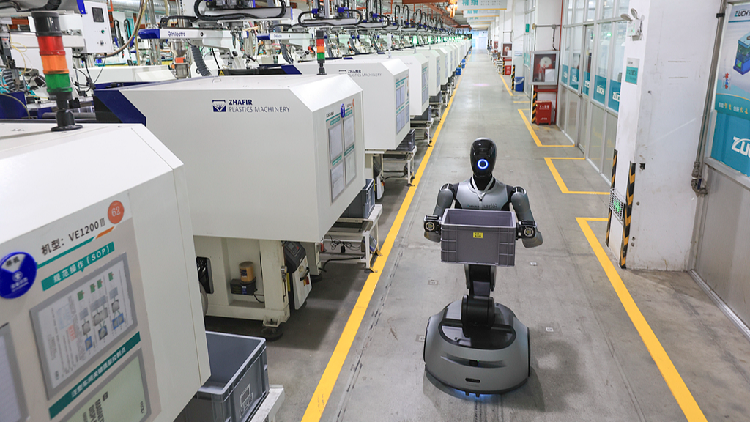
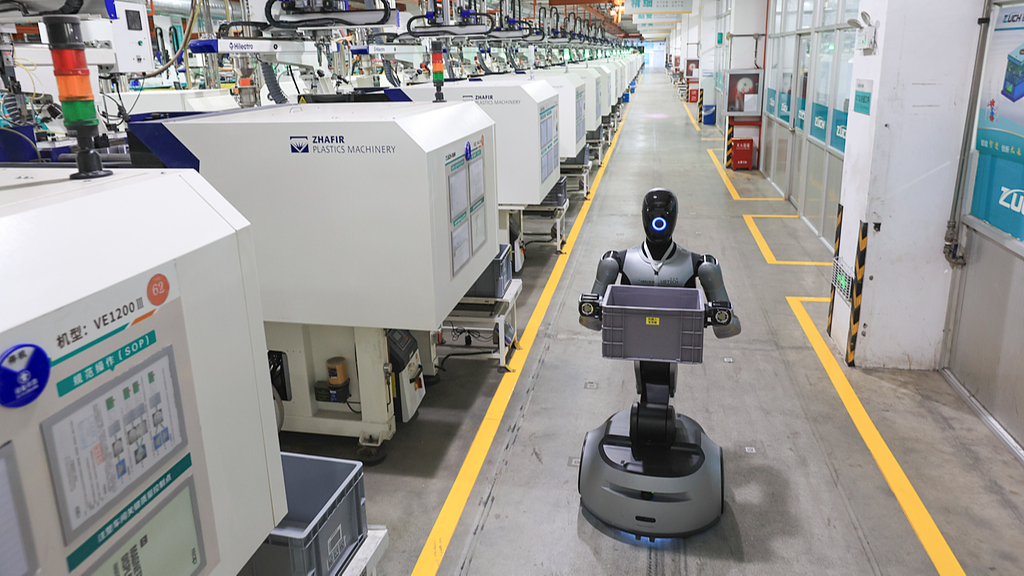
In manufacturing, China is promoting cooperation around smart factories.
A forum on smart factory development under the BRICS Partnership on the New Industrial Revolution was held in Xiamen, east China’s Fujian Province in May. It focused on jointly developing a new ecosystem for smart factories and strengthening cooperation in technology, standards, talent and capital.
The goal is to help manufacturing industries in BRICS and BRICS Plus countries move toward greater sophistication, digitalization and green development.
Talent development is another key area.
At the 2025 BRICS Engineering Conference in south China’s Shenzhen, Chinese and international engineering organizations jointly launched an initiative to establish a BRICS Federation of Engineering Organizations.
The initiative brought together Harbin Institute of Technology, the China Association for Science and Technology, engineering organizations from Russia and Brazil, and 48 other engineering organizations, universities and enterprises from BRICS countries.
It calls for cooperation in engineering education, professional development and capacity building, including greater compatibility between engineering standards.
Meanwhile, a China-BRICS Youth Innovation and Entrepreneurship Exchange Program is planned for October in Xiamen. The 10-day program will bring together young science and technology professionals from BRICS countries for training, research visits, case discussions and project presentations.
From AI platforms and digital infrastructure to smart factories and engineering education, China’s contribution to BRICS technology cooperation is taking shape across multiple sectors.
These initiatives are creating channels for technologies, expertise and talent to move across borders, helping build a more open and inclusive ecosystem for innovation and shared development.