Editor’s note: As more hyperscale AI data centers are built around the world, governments are increasingly confronting the challenge of balancing accelerating AI infrastructure expansion with limited power capacity. CGTN invites Meng Yao, the deputy director of the Energy Governance Center at the Energy Internet Research Institute, Tsinghua University, to explore how China is tackling that challenge while seeking to power AI with affordable, reliable green electricity.
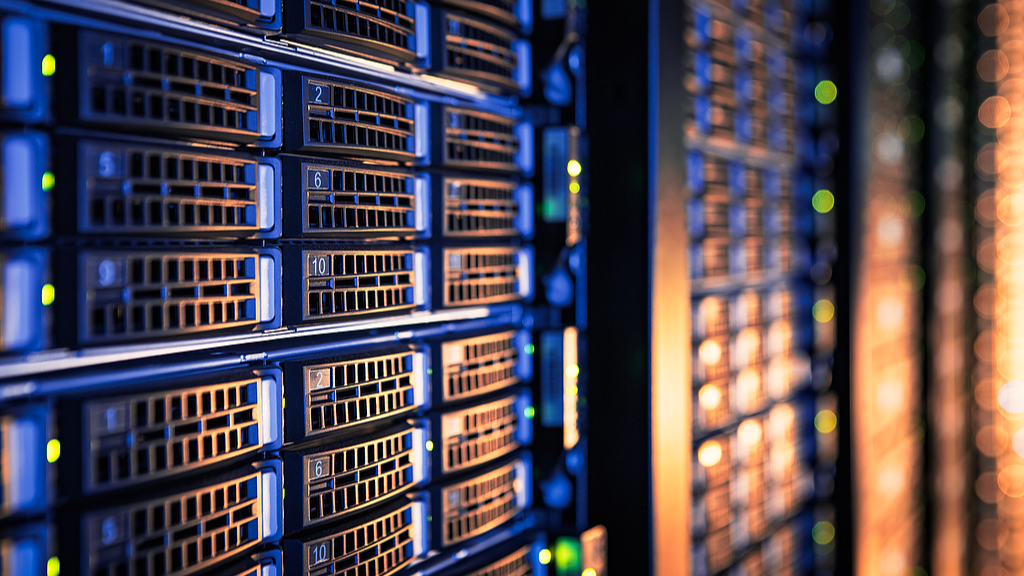
Rapid advances in large language models have driven exponential growth in computing demand, translating into massive electricity consumption. A single hyperscale AI data center (AIDC) can draw a load comparable to that of a medium-sized city.
Amid surging data-center power demand, Denmark has paused new grid connection approvals, while New York State has imposed a moratorium on permits for large new data centers. Tensions between expanding computing capacity and securing reliable power supply have become a global challenge.
In 2026, China included computing-electricity coordination in its Government Work Report for the first time and wrote it into the Outline of the 15th Five-Year Plan (2026–2030). Integrated development of computing networks, next-generation power grids and advanced communications networks has become a core strategy for China to meet AI’s rising energy appetite.
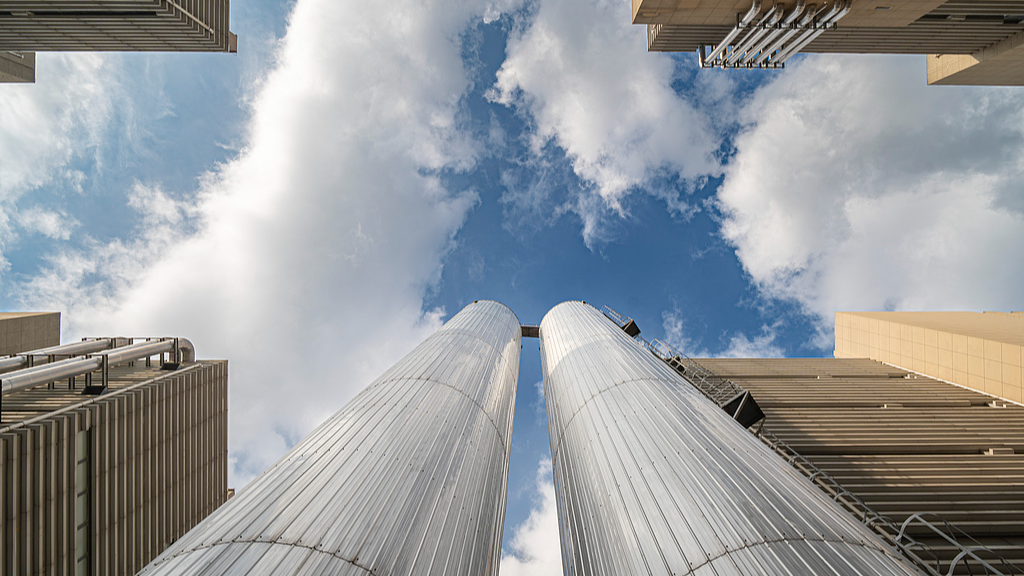
The energy trilemma behind AI expansion
The computing sector faces an energy trilemma: uninterrupted power supply, maximum clean-energy utilization and affordable electricity costs. Meeting all three goals simultaneously remains highly challenging.
China has three structural mismatches.
First, a geographical imbalance: over 70% of its wind, solar and hydropower resources lie in China’s less-developed northern and western regions, yet roughly 60% of computing demand concentrates in eastern urban clusters. Resource-rich regions often lack computing loads, while major computing hubs struggle to access sufficient green power.
Second, a temporal mismatch: wind and solar power generation fluctuates sharply with weather and diurnal cycles, while AI infrastructure requires stable, round-the-clock operation. Midday renewable generation peaks often fail to align with peak AI computing demand, while evening power consumption surges coincide with sharp declines in solar output, creating persistent supply-demand asynchronization.
Additionally, a prominent construction cycle mismatch exists: AI computing infrastructure can be rapidly expanded within months, while renewable energy and grid facilities take years to build and commission. The fast iteration of AI capacity and slow upgrade of energy infrastructure further widen the temporal supply-demand gap.
Third, institutional and operational fragmentation: the power and computing sectors have long operated separately, with independent planning, scheduling and limited interoperability. The two systems face barriers involving data sharing, operational coordination and economic incentives. These challenges make coordination between computing and electricity indispensable for high-quality digital-economy growth.
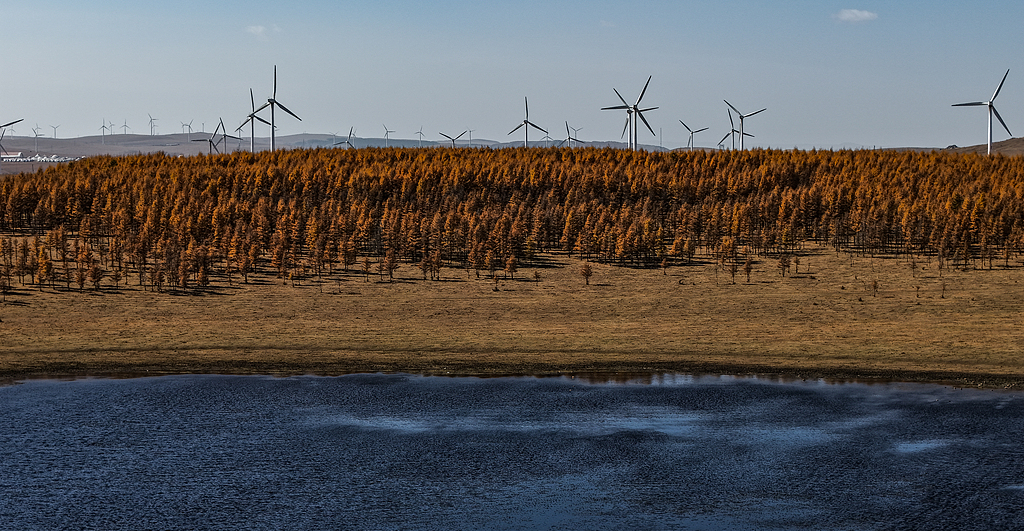
Reshaping computing and electricity allocation
China is rebalancing the spatial distribution of computing and power resources through the “East Data, West Computing” initiative, which optimizes infrastructure layout, enables cross-regional task scheduling and deepens integration between digital and energy networks.
Workloads are classified by latency sensitivity: latency-critical services such as online consultation and real-time inference stay close to end users in eastern China, while latency-tolerant tasks, including model training and offline data processing, can be shifted to western computing hubs with abundant renewables.
Meanwhile, China is scaling up direct green-power connections and integrated generation-grid-load-storage systems. In Ulanqab, north China’s Inner Mongolia Autonomous Region, dedicated transmission lines link renewable farms directly to computing clusters, paired with energy storage to smooth volatile wind and solar output and deliver stable clean power for AI.
Equally vital is coordinated development of computing, power and communications networks. By cutting cross-region data transmission costs and removing network bottlenecks, China enables flexible workload shifting between east and west, unlocking western renewable resources to support AI nationwide.

Pilots of computing-electricity coordination
Demonstration projects across China are proving the tangible value of coordinated computing and power systems. Workloads are adjusted dynamically to match renewable output and storage mitigates supply volatility to lift renewable utilization, sustain service reliability and lower power bills.
Shanghai Lingang delivered China’s first cross-provincial migration test for an automated high-precision 100-card AI intelligent computing cluster. During grid peak hours, AI training and inference workloads migrated between nodes in under three minutes, rapidly easing grid stress. The test validates how computing clusters can act as flexible resources for peak load management.
In Ulanqab, Centrin Data’s zero-carbon computing base runs an integrated renewable supply model featuring direct green power access and generation-grid-load-storage integration. Supported by 300 megawatts (MW) of wind and solar capacity and 45 MW of energy storage, the center runs energy-intensive AI training at full load when renewables are plentiful. When wind and solar fade, storage supplements power to sustain continuous operation. This model boosts local renewable absorption while guaranteeing reliable computing and reduced electricity costs.
The “Xinjiang Computing for Chongqing” initiative leverages high-speed dedicated links to run Changan Automobile’s autonomous-driving large-model training in northwest China’s Xinjiang Uygur Autonomous Region’s renewable energy-rich zones. Training proceeds during green-power surpluses, and the results are transmitted back to Chongqing via high-speed networks.
This lets Changan Automobile and other local Chongqing industries tap low-cost western green computing resources without building extra power-hungry computing facilities locally. Together, these three pilots validate the viability of computing-electricity coordination via local flexible scheduling, on-site source-load management and cross-regional resource allocation.
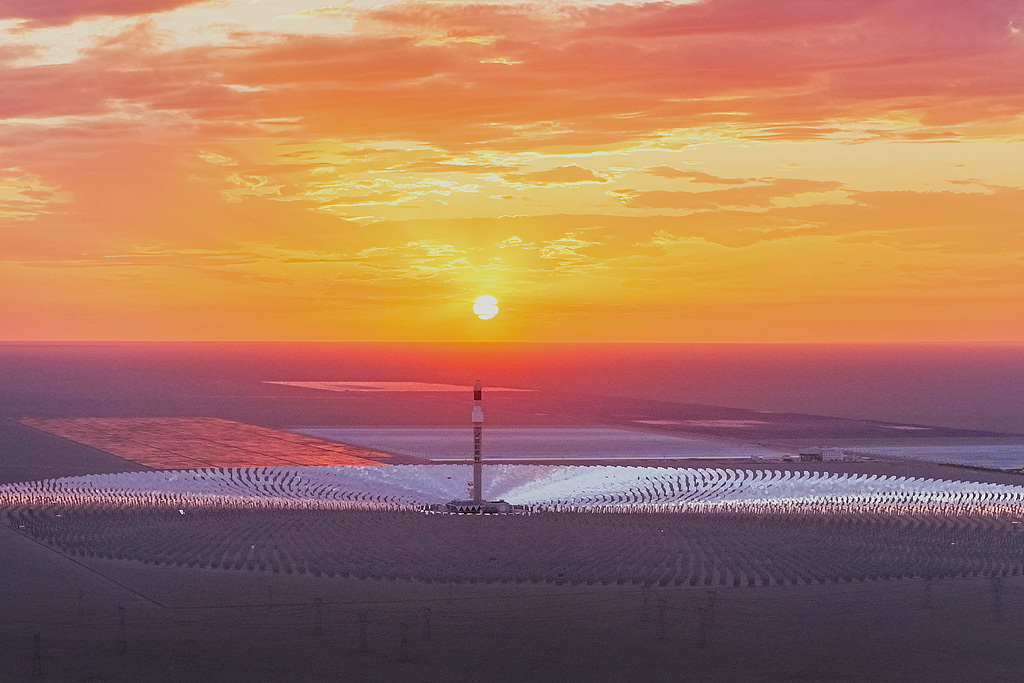
A new pathway for digital and green transitions
Robust coordination between computing and electricity requires inter-agency and cross-industry collaboration, unified technical standards, and market-based pricing mechanisms. As China advances integrated computing, power, and communications infrastructure under the 15th Five-Year Plan, the relationship between AI and power systems will fundamentally transform.
Computing infrastructure will evolve from a major electricity consumer into a flexible grid resource, adjusting loads to stabilize power systems and accommodate more renewables. By powering AI with green electricity while deploying flexible computing loads to boost renewable integration, China is charting a mutually reinforcing path for digital and energy transitions.