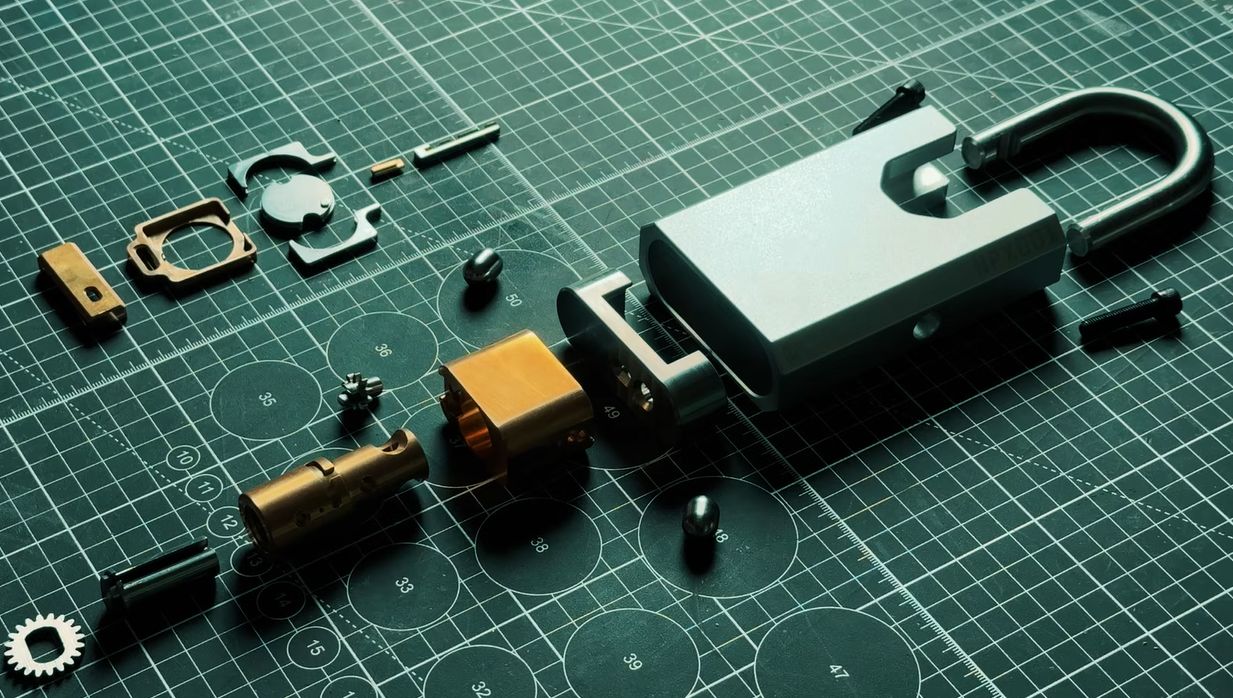
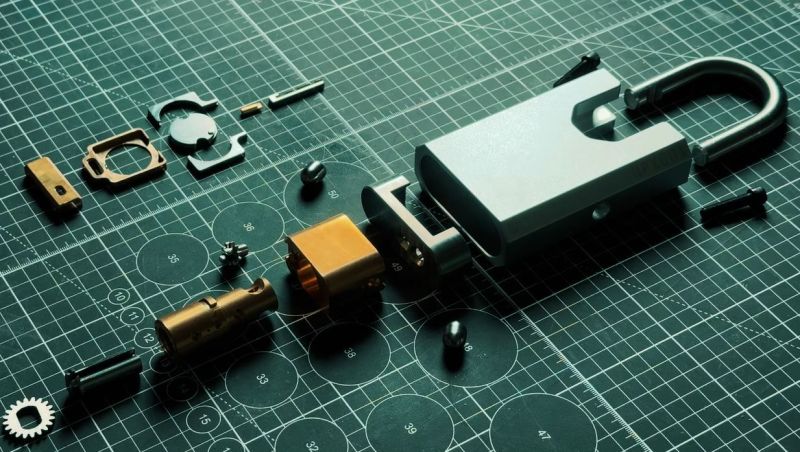

Throughout the centuries the art of lock-making and lock-picking have been trapped in a constant struggle, with basic lock designs being replaced by ever more complex ones that seek to thwart any lockpicking attempts, as well as less gentle approaches. When it comes to the very common pin-and-tumbler lock design, the main issue here is that the keyway also provides direct access to the lock’s mechanism. This led [Works By Design] to brainstorm a lock design in which the keyway is hidden.
The ingenious part here is that because the actual key is rotated away after insertion, there is no clear path to the pins. This did require some creative thinking to have a somewhat traditional style key as well as a way to turn the internal mechanism so that the key would be pressed against the pins. Here inspiration was drawn from the switchable magnet mechanism as seen with e.g. magnetic bases. This ensures the key and key handle can be detached and attached quite firmly.
After many 3D printed prototypes, a metal version was CNCed and subjected to some early testing by a locksmith, who even with having seen the CAD model of the lock was stumped. With this initial result and some user feedback in the bag, it was time for large-scale testing with more lockpick enthusiasts, as there are many more ways to open a lock beyond pushing pins. That said, a mechanism was also added to the lock to prevent bumping attacks.
The next testers were found in the Lock Pickers United community, one of whom raised the issue of an impressioning attack. With a couple of test locks on their way to said lockpicking enthusiasts it’ll be exciting to see whether this new lock design will set the standard for future locks or not.