If you miss the days when you used Basic on your classic computer or wrote embedded software with a Basic Stamp, then maybe dust off your Arduino UNO or any similar AVR board and try nanoBASIC_UNO from [shachi-lab].
Apparently, the original code was meant for the STM8S, but this port targets the ATmega328P. It is Basic more or less as you remember it. There are enough extensions to deal with GPIO, the analog systems, and so forth. At build time, you can decide if you want 16-bit or 32-bit integers.
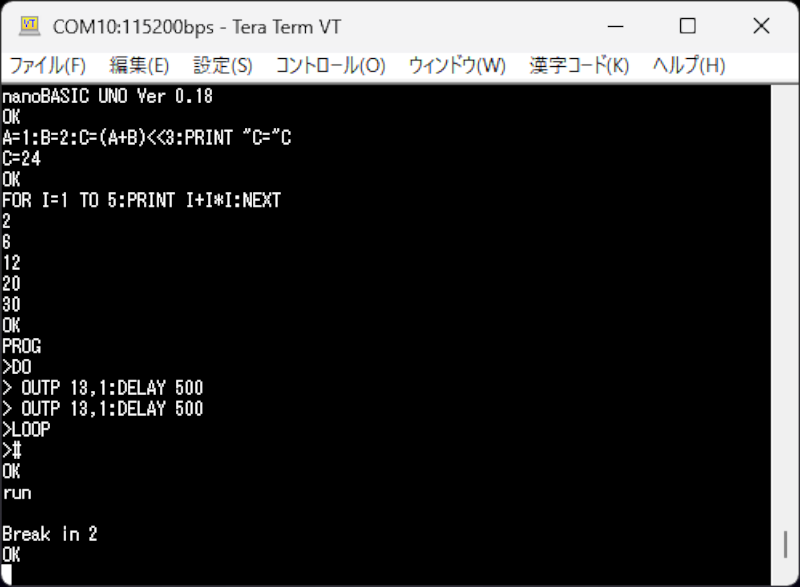
One thing that is a little odd is how it handles direct mode. In classic Basic, anything without a line number executes immediately. Line numbers simply store your program line until you type RUN. nanoBASIC_UNO doesn’t force you to use line numbers. To indicate you are programming, you have to start with the PROG keyword. Then you can enter lines into the RAM buffer until you enter a # character. The program is stored in RAM, but there is a way to save programs to flash.
You can also build the code for Windows or Linux if you just want to experiment. Looks like fun.
If you missed the heyday of the Basic Stamp, you missed a lot of fun. If you just want a quick Basic hit, try your browser.