The telephone was an invention that revolutionized human communication. No more did you have to physically courier a letter from one place to another, or send a telegram, or have a runner carry the message for you. Instead, you could have a direct conversation with another person a great distance away. All well and good if you can speak and hear, of course, but rather useless if you happen to be deaf.
Those hard of hearing were not left entirely out of the communication revolution, however. Well before IP switched networks and the Internet became a thing, there was already a way for the deaf to communicate over the plain old telephone network—thanks to the teletypewriter!
Over The Wires
The teletypewriter (TTY) has been around for a long time. The first device came into being in 1964, developed by James C. Marsters and Robert Weitbrecht, both deaf. Their idea was to create a method for deaf individuals to communicate over the phone network in a textual manner. To this end, the group sourced teleprinters formerly used by the US Department of Defense, and hooked them up with acoustic couplers that would allow them to mate with the then-ubiquitous AT&T Model 500 telephone. Thus, the TTY was born. A user could dial another TTY machine, and key in a message, which would print out at the other end. The receiving user could then respond in turn in the same manner.
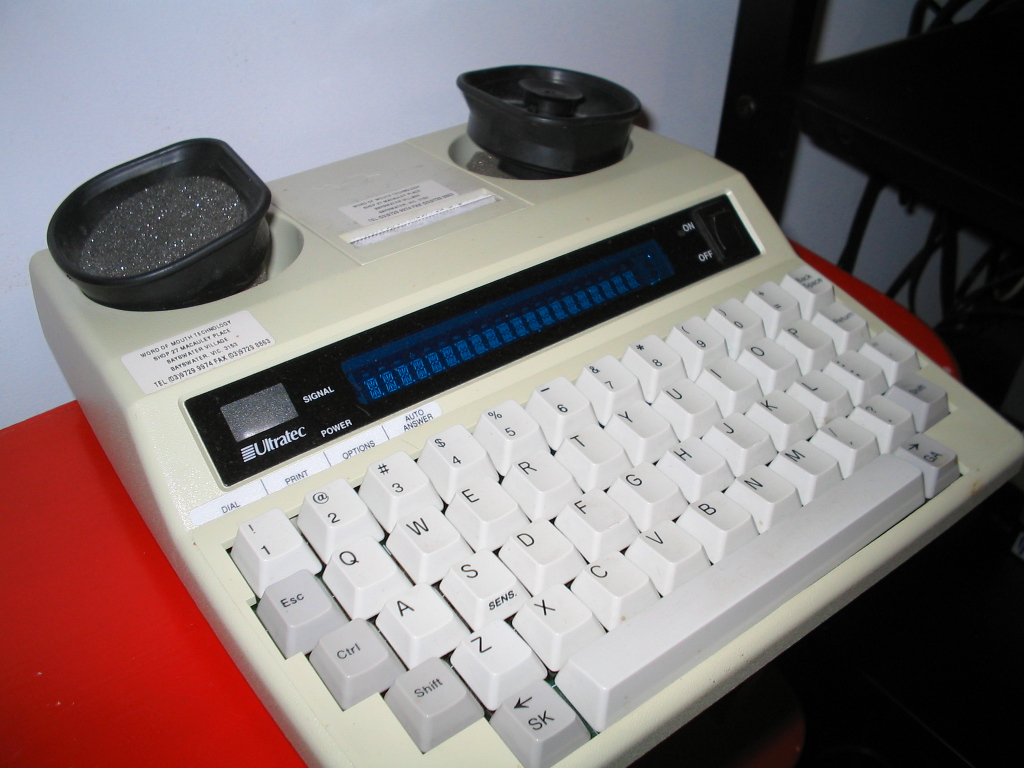
The early machine used simple frequency-shift keying to encode the characters of the alphabet and some basic control codes, allowing text messages to be sent back and forth via a regular analog telephone call. In the US, where the devices eventually became known as telecommunications device for the deaf (TDDs), the devices used an improved development of Baudot code (the USA-TTY variant of ITA-2) to send signals over the phone lines.
This involved representing characters with five bits, which was enough to cover the 26 characters of the English alphabet, plus 0-9 and a few control codes. Transmission rates were slow—typically just 45.5 to 50 baud. With a 5-bit code, this limited transmission to approximately 10 characters per second.

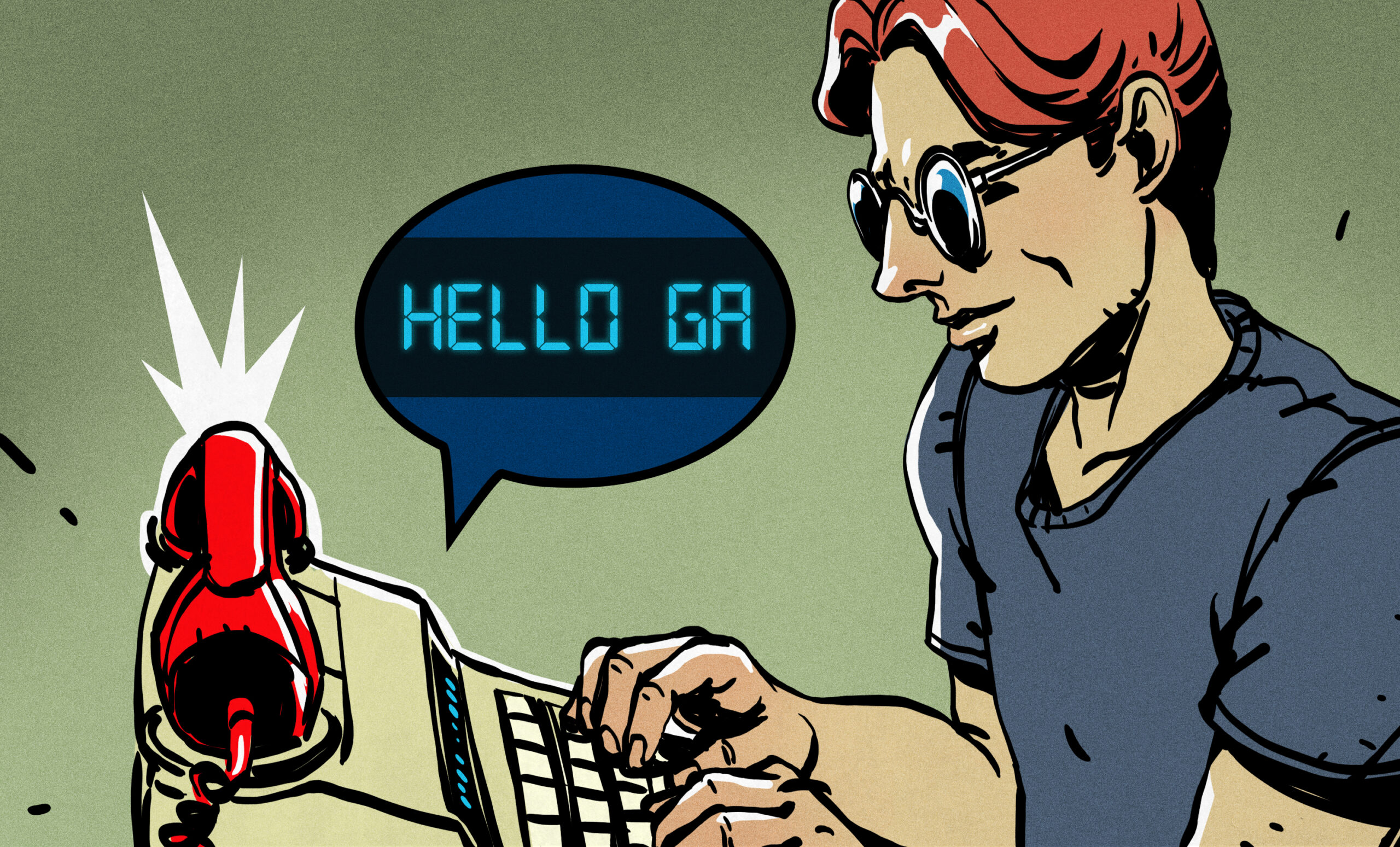
TTYs quickly caught on as a useful device for the deaf and hard of hearing, and developed its own norms similar to other textual telecommunications methods that came before. Users would key “GA” for “go ahead,” to indicate the other party could “speak” on the half-duplex link, as two users typing at the same time would lead to garbled messages. “SK” stood for “stop keying” to indicate the ending of a call. Abbreviations were common to save effort, such as “CU” (see you) and “TMW” (tomorrow).
Relay Service
At its heart, the TTY was a very useful device for allowing its users to communicate via textual means to others with compatible hardware. However, alone, a TTY could not allow a deaf user to communicate effectively with regular telephone users. To enable greater accessibility, many organizations developed telecommunications relay services.
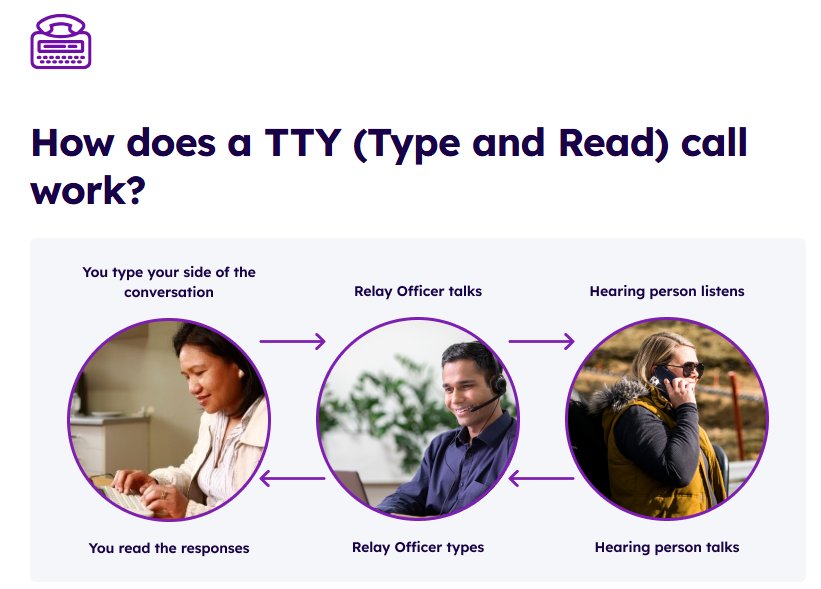
These first existed as a number that deaf TTY users could call in order to connect to a human operator with their own TTY machine. This operator would place calls on behalf of the deaf individual, speaking on their behalf to other parties based on the deaf user’s inputs to their TTY device. In turn, the operator would key out the responses from the called party so the deaf individual could read back the conversation.
The first relay service was established by Converse Communications in Connecticut in 1974. The concept was quickly picked up by many other telecommunications operators around the world to provide an accessibility aid to those who needed it. These days, relay services still exist, though a great many relay services now operate over IP-based systems rather than via phone lines and TTY devices.
Hanging On
TTY still exists to some degree out in the world today. There are still subscribers with analog phone lines, and the basic TTY technology still fundamentally works over these links. However, the rise of SMS text messaging and widespread Internet connectivity have somewhat negated a lot of use cases for TTY technology these days. There have also been cases where digital upgrades to the phone network have made TTY operation more difficult, though some efforts have been made to ensure compatibility in some networks, particularly for emergency uses.
Ultimately, TTY was a technology that brought telecommunications access to a greater number of people than ever before. Like the landline phone and the fax machine, it’s no longer such a feature of modern life. However, it was an important link to the world for many in the deaf and hard of hearing community, and was greatly valued for the connection and accessibility it provided.