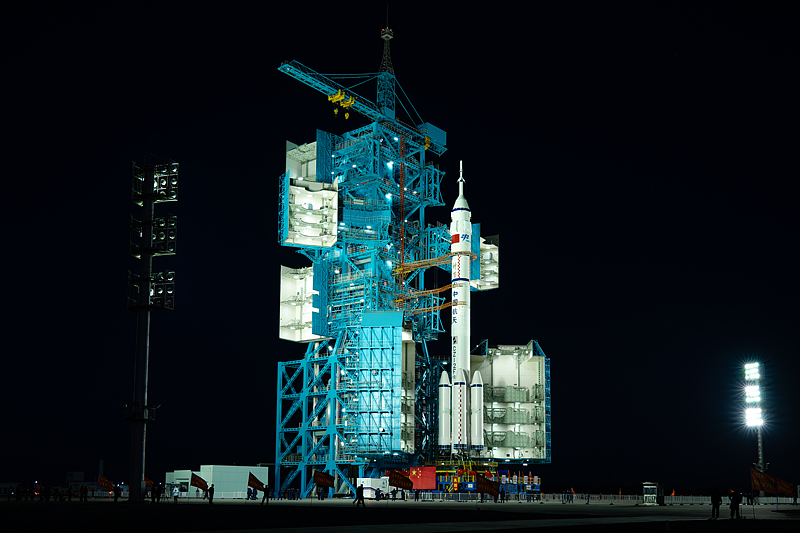
The Shenzhou‑24 crewed spacecraft is scheduled for launch at 8:18 a.m. Wednesday from the Jiuquan Satellite Launch Center in northwest China, the China Manned Space Agency announced at a press conference on Tuesday.
The landmark mission will include Muhammad Zeeshan Ali, Pakistan’s astronaut serving as payload specialist — the first‑ever foreign visitor aboard China’s Tiangong space station, a high‑profile milestone of long‑running China‑Pakistan space collaboration.
This human‑spaceflight endeavour traces back to a landmark bilateral accord.
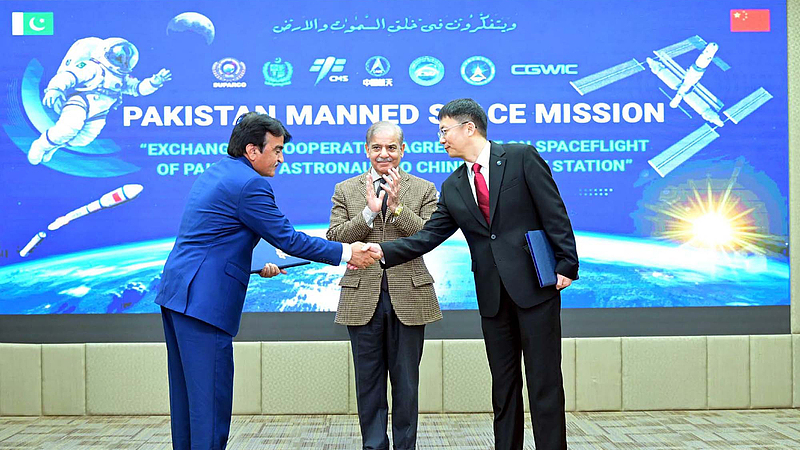
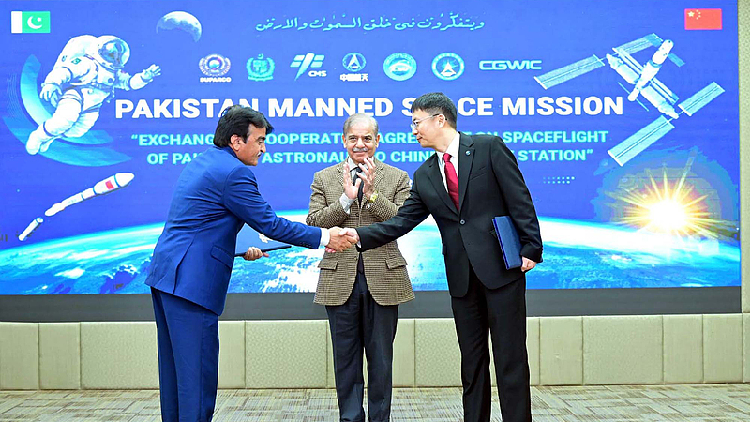
On February 28 local time in 2025, at a ceremony in Islamabad, Pakistani Prime Minister Muhammad Shehbaz Sharif witnessed the exchange of a cooperation document between the China Manned Space Agency and Pakistan Space and Upper Atmosphere Research Commission (SUPARCO), paving the legal groundwork for Pakistani astronauts’ participation in China’s space station missions.
China and Pakistan boast a long‑standing partnership in space science.
Their collaboration has expanded from satellite development, launch and application to lunar and deep‑space exploration, as well as human spaceflight programs.
In September 2025, the two governments released the Action Plan for Building an Even Closer China‑Pakistan Community with a Shared Future in the New Era (2025‑2029).
The document pledges continued implementation of projects under the China‑Pakistan Space Cooperation Outline (2021‑2030), further cooperation on lunar and deep‑space exploration, and joint work on the selection and training of Pakistani astronauts.
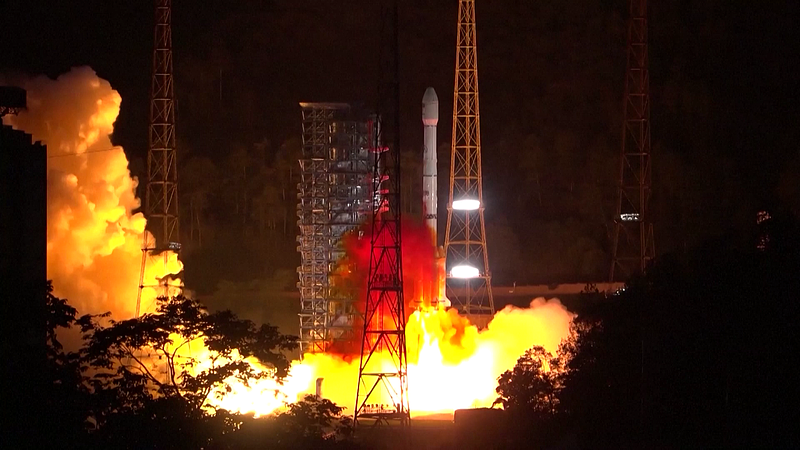
Fruitful progress has been achieved across multiple space‑related sectors. Starting with remote‑sensing and communication satellite launches, bilateral cooperation moved onward when Pakistan’s CubeSat ICUBE‑Q hitched a ride on China’s Chang’e‑6 lunar exploration mission.
Now Pakistani astronaut Muhammad Zeeshan Ali is set to fly to Tiangong on the Shenzhou‑24 mission as payload specialist, marking another milestone for bilateral space ties.
Remote‑sensing and communication satellites jointly developed or launched through China‑Pakistan cooperation are powering socio‑economic development across Pakistan.
Satellite data supports agricultural monitoring, natural‑resource surveys, environmental observation and disaster‑risk reduction, helping Pakistan steadily upgrade its capacity for space‑technology application.
The partnership has also broken new ground in deep‑space and human space exploration. Pakistan’s ICUBE‑Q CubeSat separated from the Chang’e‑6 orbiter and acquired lunar observation data, enabling Pakistan to carry out its very first lunar exploration activity.
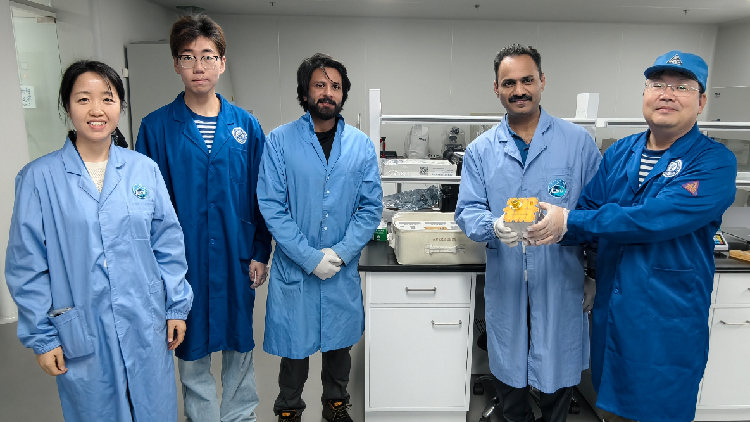
Muhammad Zeeshan Ali will conduct four joint China‑Pakistan science experiments focusing on biotechnology and materials science during his stay in orbit, including an experiment on photosynthetic cyanobacteria, according to Tuesday’s press briefing.
Moving forward, China and Pakistan will keep expanding practical space cooperation.
Both sides will advance joint research on lunar exploration, deepen exchanges in astronaut training, and explore more opportunities for space‑technology innovation and deep‑space exploration, bringing tangible benefits to the two peoples.